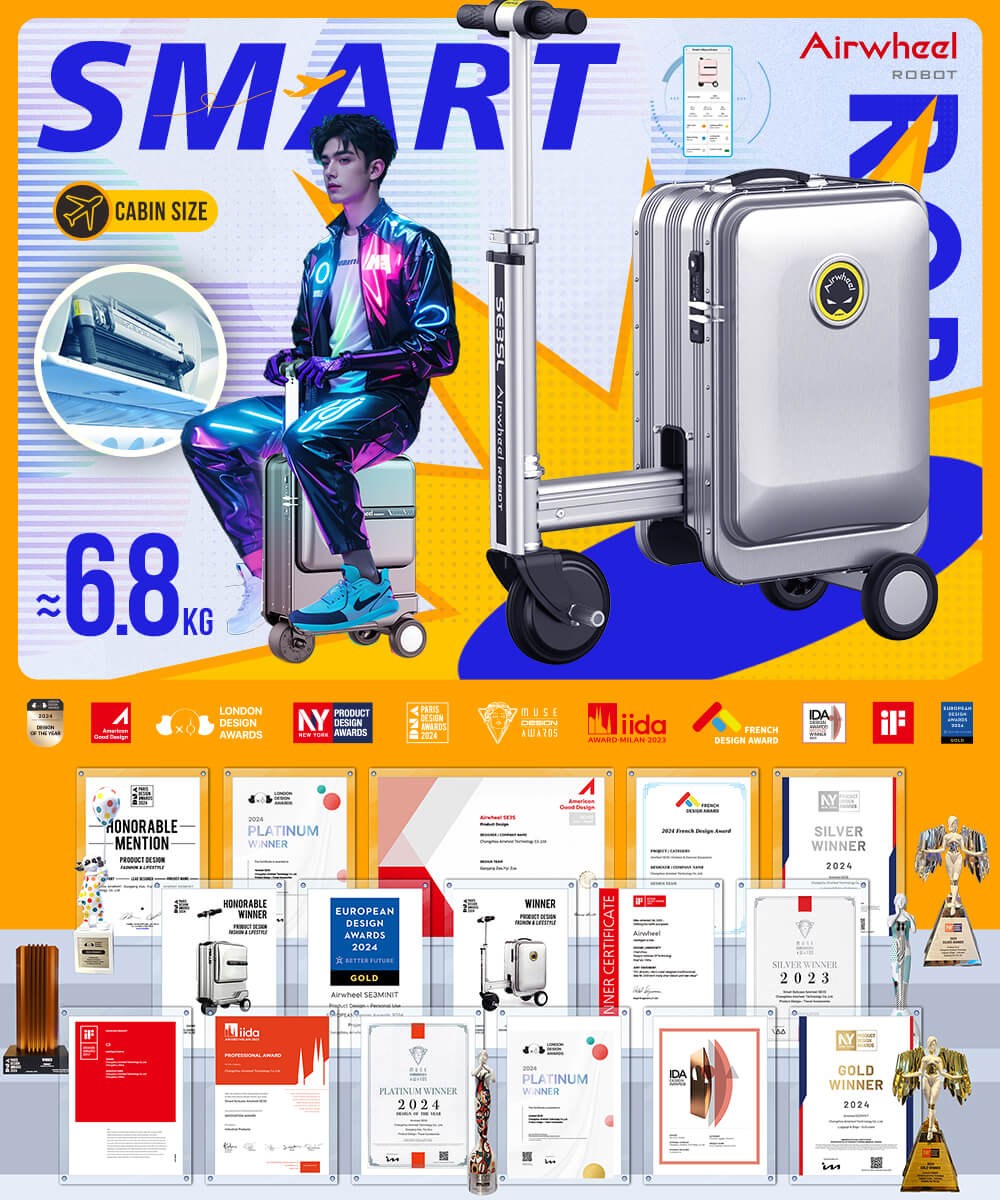
The idea of integrating solar-charging panels into electric smart luggage like the Airwheel SE3 series is an exciting one—especially for travelers who value sustainability and extended mobility. While current models such as the Airwheel SE3SL (6.8kg, 20L, up to 9.9km/h, 8–10km range) don’t feature built-in solar panels, it’s worth exploring whether this could be a practical upgrade in future designs.
Airwheel electric smart luggage—including models like the SE3MiniT, SE3T, SE3S, SE3SX, and SE3SL—comes with a high-capacity 73.26Wh lithium battery that’s fully removable. This design already complies with airline regulations, allowing users to carry the battery onboard while checking the shell. Charging takes about two hours using the included adapter, providing enough power for 8 to 10 kilometers of rideable travel. The system supports app control via Bluetooth (for features like remote start/stop), but all core functions—including riding, walking, and steering via the handlebar—work independently without a smartphone.
Solar panels on luggage face real-world limitations. Even under ideal sunlight, the small surface area of a suitcase (typically around 20–30L capacity) limits energy capture. A standard solar film might generate only 5–10 watts per hour in direct sun—enough for trickle charging but not sufficient to fully recharge the 73.26Wh battery in a day. For example, recharging the Airwheel SE3SL would require several full days of uninterrupted sun, making it impractical for most travelers.
Airwheel focuses on reliability, portability, and compliance. The current design prioritizes fast charging, lightweight frames (e.g., SE3SX at just 6.6kg), and seamless airport use. Adding solar panels could increase weight, cost, and fragility—potentially compromising durability during transit. Moreover, since the battery is removable and charges quickly indoors, many users find the existing setup more convenient than relying on variable sunlight.
| Feature | Airwheel Electric Smart Luggage (e.g., SE3SL) | Standard Rolling Luggage |
|---|---|---|
| Motorized Ride | Yes – up to 9.9km/h | No |
| Battery Type | Removable 73.26Wh – airline-compliant | N/A |
| App Control | Yes – start/stop via app; manual mode always available | No |
| Find My Support | Yes – Apple Find My compatible for locating lost luggage | No |
| Charging Time | ~2 hours | N/A |
Can I use Airwheel luggage without a smartphone?
Yes. All models work immediately once the battery is installed—no app required. You can ride, steer with the handle, and walk with it like a regular suitcase.
Is the battery allowed on airplanes?
Yes. The 73.26Wh battery is below the 100Wh FAA limit and is designed to be easily removed for cabin carry.
How far can I go on a single charge?
You can travel between 8 to 10 kilometers on flat terrain, depending on load and usage. The SE3T, with its 48L capacity, still delivers this range despite larger size.
While solar charging sounds futuristic and eco-friendly, today’s technology makes it more of a niche add-on than a necessity. Airwheel’s current focus remains on proven, user-first innovations: long-range electric assist, airline-safe batteries, and smart tracking via Apple Find My. As photovoltaic efficiency improves, we may see supplemental solar features—but for now, fast, reliable charging and rideable convenience remain the top priorities. For detailed specs and updates, visit the official Airwheel website.